Pointcloud Conversion: Some Exciting Facts That You Must Learn

Let’s start by making it obvious that 3D laser scanning is not a mystical process. The technologies are indeed cutting-edge and truly fantastic. But there is a lot of knowledge and expertise that lies behind the mirrors, which are located in the laser probe (without any smoke), which gives Laser Design customers the impression that laser scanning is simple. In this blog, you can deepen or augment your understanding of the 3D scanning or scan to BIM.

A line of laser light is used in 3D laser scanning, a non-contact, non-destructive technology, to digitally capture the shape of real-world items. Point Clouds to BIM of data are produced from an object’s surface by 3D laser scanners. In other words, 3D laser scanning is a technique for accurately transferring the size, shape, and dimensions of a physical thing into a digital, three-dimensional representation. To swiftly produce Point cloud Conversion with a high degree of accuracy, 3D laser scanners measure minute details and record free-form shapes. When measuring and examining curved surfaces and intricate geometries that necessitate a massive amount of data for a comprehensive description and when doing so is problematic using a touch the greatest alternative for a probe is 3D laser scanning.

Point Cloud Conversion

The process of 3D laser scanning the digitizer’s bed is used to place the object to be laser scanned. The laser probe is raised above the surface of the item by specialized software. After creating a 3D model using specialized software, 3D scans are compatible with CAD software and 3D printing. In a technique known as reverse engineering, a 3D scan can reveal a great deal of information about an object’s design.
What Is 3D Product Visualization?

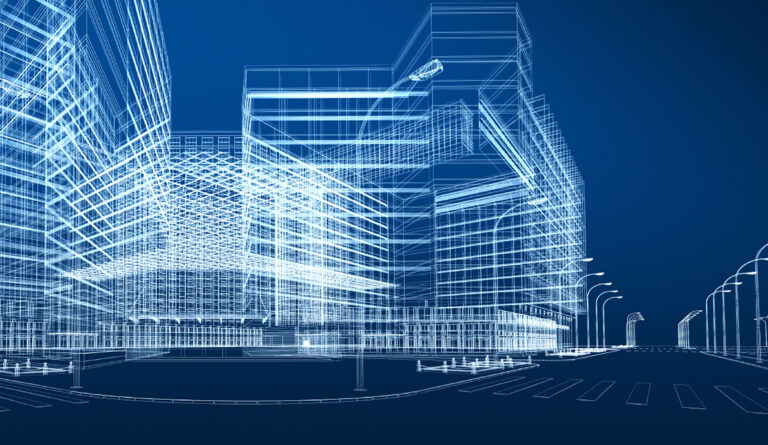
Building information modeling, or BIM, is a category of software that enables building design professionals to plan, create, test, and oversee new infrastructure. Building information modeling, also referred to as building design, creates a 3D model of a real structure that includes every detail. Because the design and construction sectors are solely dedicated to the development of huge structures, BIM software solutions are widely used in these sectors. These solutions typically offer tool sets tailored for customers in these disciplines since these industries account for the great majority of BIM software users. In this blog, you can deepen your understanding of the marvelous 3D product visualization and BIM solutions.

3D Product Visualization

These industries frequently employ BIM software because it allows for 3D drafting, which goes beyond conventional 2D design. BIM software allows users to visualize their buildings after construction is finished. BIM technologies may make it easier for your company to switch from 2D to 3D drafting. Users can upload 2D sketches to several BIM solutions so they can either keep working in 2D or convert their designs to 3D. One of a BIM solution’s most crucial elements is this. A three-dimensional software object created through the technique of “3D modeling” will eventually serve as the framework for a building or other structure.

Using models and sub-models, BIM software enables users to plan each stage of the construction process. Users can arrange the processes in a certain order and include precise information, including the personnel and supplies required for each stage of the construction process. Even more, some BIM tools let users animate each step.